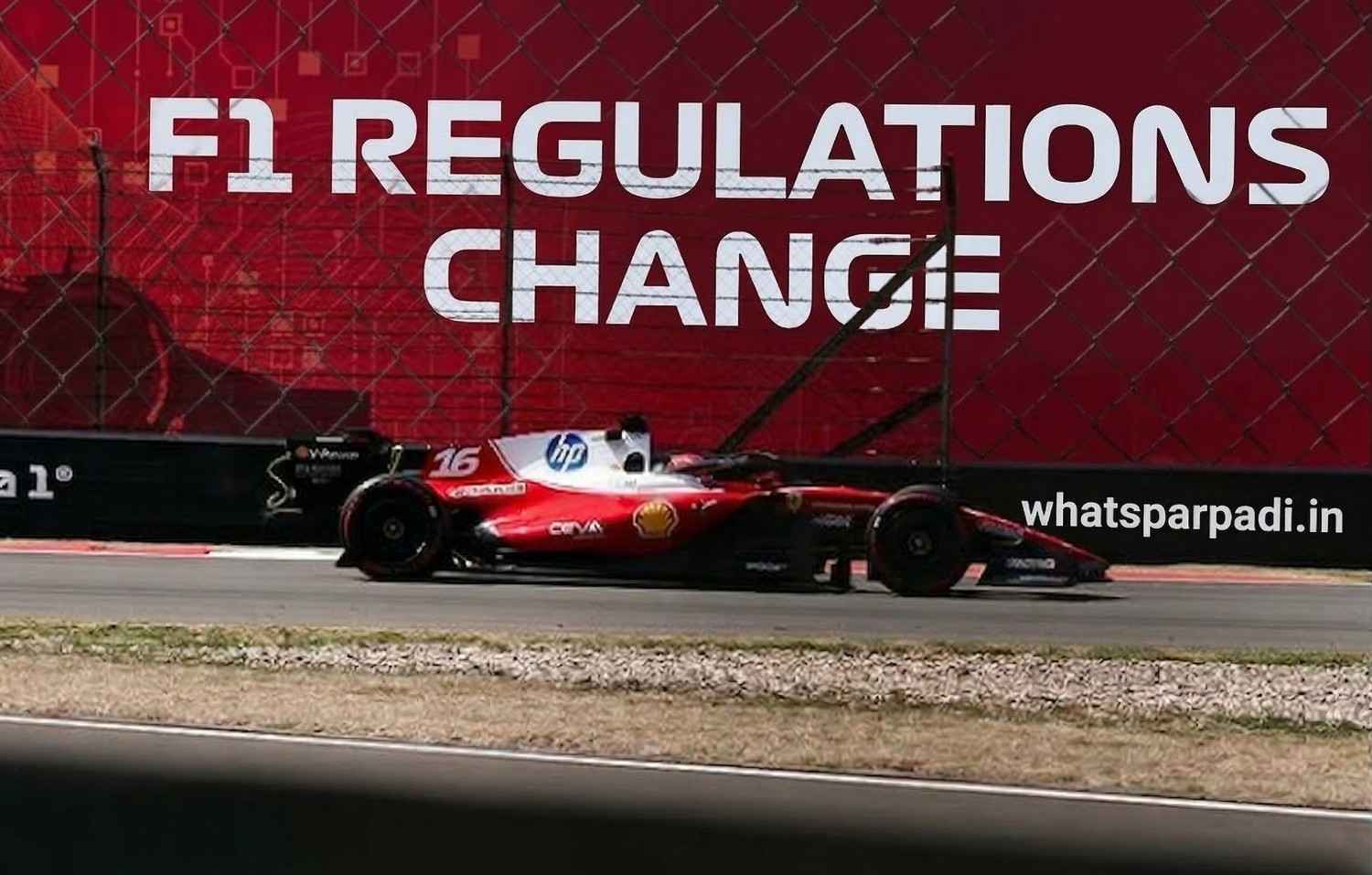
Topics Discussed
- 1. The 2026 F1 Rule Overhaul Explained
- 2. Power Unit Architecture: ICE & The 50/50 Split
- 3. Energy Management, Super-Clipping, and Performance Impact
- 4. Technical Deep-Dive: MGU-K and MGU-H
- 5. Active Aerodynamics: Ferrari's Rotating Wing & The End of DRS
- 6. Battery Limits, Fuel Regulations, and Race Strategy
- Final Verdict - Navigating the 2026 Season
- Frequently Asked Questions
Introduction - The New Era of Formula 1
The 2026 Formula 1 season marks the most dramatic technological overhaul in modern motorsport history. Designed to improve sustainability, foster closer wheel-to-wheel racing, and attract major world-class manufacturers, including Audi, Ford/Red Bull Powertrains, and GM/Cadillac, these new regulations have fundamentally reshaped how F1 cars are engineered and driven.
However, early races have sparked intense debates across the paddock and global fanbase. From active aerodynamics to electric energy "clipping" on straightaways, understanding the 2026 rulebook is essential for both new fans and seasoned viewers.
This comprehensive guide breaks down the science, power units, strategic shifts, and driving dynamics behind the 2026 F1 regulations, explaining everything you need to know in clean, structured detail.
1. The 2026 F1 Rule Overhaul Explained
The 2026 regulations represent a ground-up redesign aimed at lightweight agility and hybrid efficiency, introducing several fundamental changes to chassis and engine design:
- Chassis & Dimensions: Cars are shorter, narrower, approximately 30 kg lighter, and feature significantly reduced ground-effect aerodynamics.
- 50/50 Power Unit Architecture: Power output is split almost equally between internal combustion petrol power and electric battery deployment.
- Active Aerodynamics: The traditional Drag Reduction System (DRS) is completely retired, replaced by automated active wings and an electric Overtake Mode.
During pre-season testing and early Grand Prix events, such as the 2026 Australian GP at Albert Park, fans witnessed frequent position exchanges between leaders like Charles Leclerc and George Russell. While high on drama, drivers like Max Verstappen criticized the initial battery-governed dynamics as "artificial" and "anti-racing." Mercedes dominated the opener with a 1-2 finish (George Russell 1st, Kimi Antonelli 2nd), demonstrating that early dominance relies as much on battery software algorithms as pure mechanical grip.
The FIA has already initiated regulatory refinements to balance energy deployment, ensuring the sport maintains its high-stakes competitive edge.
2. Power Unit Architecture: ICE & The 50/50 Split
The modern F1 engine combines traditional combustion power with high-capacity electric propulsion:
- ICE (Internal Combustion Engine): A 1.6-litre V6 turbocharged engine running on 100% sustainable drop-in fuel, outputting approximately 400 kW (≈ 536 hp).
- MGU-K Electric Motor: At peak deployment, the electric motor supplies up to 350 kW (≈ 469 hp).
Combined, the system generates approximately 750 kW (over 1,000 hp), evenly balanced between synthetic petrol and electrical energy.
On tracks with limited heavy braking zones like Albert Park, where recharging opportunities are restricted, this 50/50 balance creates unique tactical scenarios:
- Lap 1: The lead car deploys a full 350 kW electric boost down the main straight, pulling cleanly away from rivals.
- Lap 2: Having depleted its battery reserve defending position, the lead car drops to pure 400 kW ICE power, forcing it to "clip" mid-straight and lose acceleration.
- Pursuing Car: Holding a fully charged battery, the trailing car deploys its electric boost and executes an immediate counter-overtake.
3. Energy Management, Super-Clipping, and Performance Impact
The key differentiator in 2026 is software-driven energy management. Mercedes established an early lead by developing optimized energy recovery maps and chassis balance that preserve battery charge over long stints.
This dynamic introduced a crucial driving phenomenon known as Super-Clipping. While remaining 100% flat on the throttle along a straightaway, a driver can engage a dedicated recharge map. The electric generator instantly draws up to 250 kW of engine output before it reaches the rear wheels, routing that power directly into the battery. Although the car remains at full throttle with low-drag wings, forward acceleration visibly drops mid-straight, creating the "clipping" effect seen on broadcast telemetry.
Battery recharging occurs through two main avenues:
- Heavy Kinetic Braking: The MGU-K harvests up to 350 kW during deceleration into corners.
- Throttle Super-Clipping: Harvesting up to 250 kW during full-throttle straightline running.
When running purely on internal combustion power (when the battery is empty), cars operate at ~400 kW compared to the ~550–600 kW ICE output of the 2014–2025 hybrid era. Consequently, qualifying times in Australia dropped by ~3.4 seconds compared to 2025. While average lap speeds are slightly lower, short bursts of maximum electric deployment still produce extreme top speeds.
4. Technical Deep-Dive: MGU-K and MGU-H
Understanding the hybrid system requires analyzing the key motor generator units:
- MGU-K (Motor Generator Unit – Kinetic): Connected directly to the drive axle. In Deploy Mode, it delivers up to 350 kW of electric power to the rear wheels. In Harvest Mode, it operates as an electrical generator.
- MGU-H Removal (Motor Generator Unit – Heat): Previously recycled heat from turbocharger exhaust gases. It was eliminated for 2026 to simplify manufacturing, cut costs, reduce weight, and ensure technology remains relevant to commercial road vehicles. Consequently, the MGU-K now performs all energy harvesting tasks.
During super-clipping, the MGU-K intercepts engine torque prior to the differential, converting mechanical energy into chemical storage within the energy store without requiring the driver to lift off the accelerator.
5. Active Aerodynamics: Ferrari's Rotating Wing & The End of DRS
Because the MGU-K cannot harvest and deploy energy simultaneously, aerodynamic drag reduction plays a critical role in efficiency. DRS has been completely replaced by dual active aerodynamic systems:
- Z-Mode (Cornering): High-downforce aerodynamic configuration engaged automatically in technical sector corners.
- X-Mode (Straightline): Low-drag active aero state that flattens front and rear wings on designated straightaway zones for all cars.
- Electric Overtake Mode: A manual 350 kW electrical boost available to attacking drivers when within 1 second of the car ahead.
A standout innovation is Ferrari's 180° Rotating Rear Wing. Rather than utilizing a conventional opening flap, the top element rotates a full 180° on its central axis, turning completely upside down in low-drag mode. This reverses the airfoil camber, maximizes slot gap airflow, and significantly reduces straightline drag compared to standard active wings.
6. Battery Limits, Fuel Regulations, and Race Strategy
When a car's battery reaches 0% usable charge, the engine does not stall. The car continues racing solely on its 400 kW internal combustion engine. While lap times temporarily increase, drivers can regenerate battery charge within half a lap through strategic braking or super-clipping.
The energy store consists of a lithium-ion battery package with a maximum usable energy flow cap of ~4 MJ (1.1 kWh) per lap.
In addition, fuel capacity has been reduced dramatically:
- Previous Era Fuel Limit: ~110 kg per race.
- 2026 Fuel Limit: ~70 kg per race (over 35% reduction).
This fuel reduction is achieved through 100% sustainable advanced fuels combined with the higher electrical output ratio, marking a major milestone in motorsport energy efficiency.
Final Verdict - Navigating the 2026 Season
The 2026 regulations have transformed Formula 1 into a high-speed energy management chess match. As teams refine their energy recovery algorithms and the FIA adjusts deployment limits across upcoming circuits, drivers who master both battery preservation and active aerodynamic timing will dominate the championship grid.
Frequently Asked Questions
No, they didn’t ruin it — but they created a very controversial and chaotic start. The cars are smaller, lighter, and use more electricity than ever before. Key changes include shorter, narrower, ~30 kg lighter cars, 50/50 power units between petrol and electric, and active wings replacing DRS.
ICE stands for Internal Combustion Engine. The 50/50 power split means at peak power the electric motor (MGU-K) can deliver up to 350 kW, matching the ICE's roughly 400 kW, totaling ~750 kW peak power split almost equally.
Mercedes is winning due to superior energy-management software. Super-clipping is a technique where the driver selects a recharge map while flat on the throttle. The MGU-K switches to generator mode, 'stealing' up to 250 kW from the wheels to recharge the battery mid-straight, which drops acceleration.
MGU-K (Motor Generator Unit – Kinetic) connects to the rear wheels to add power or harvest electricity. The MGU-H (Motor Generator Unit – Heat) recycled exhaust heat but was removed in 2026, forcing the MGU-K to handle all hybrid tasks.
No, harvest and deploy cannot happen simultaneously. DRS is completely gone in 2026. It's replaced by automatic active aerodynamic wings that flatten on designated straights and an electric Overtake Mode (350 kW boost).
The car does not stop. It continues the race on pure ICE power (~400 kW), losing electric boost and becoming much slower. Recharging can be resumed manually through braking or super-clipping.